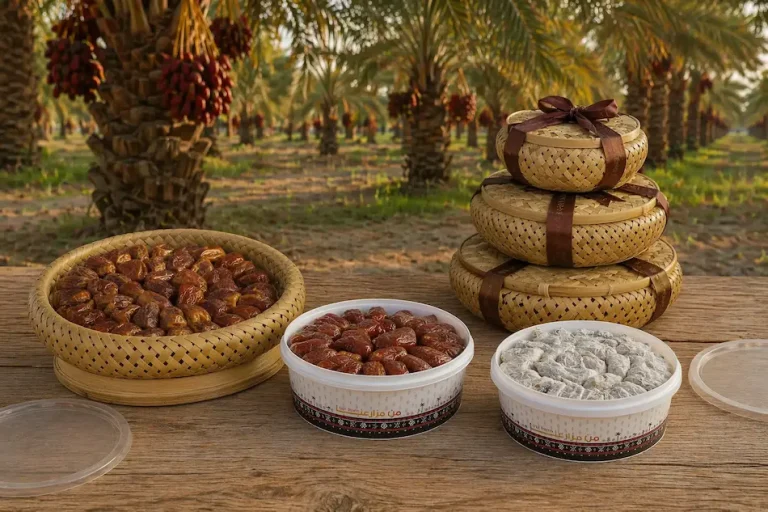
In the heart of Abu Dhabi, amidst the historic oases of Liwa, the date palm tree is no longer just a traditional symbol of Arabian hospitality. Today, it has evolved into a sustainable economic and industrial engine aligned with the UAE’s national circular economy agenda.
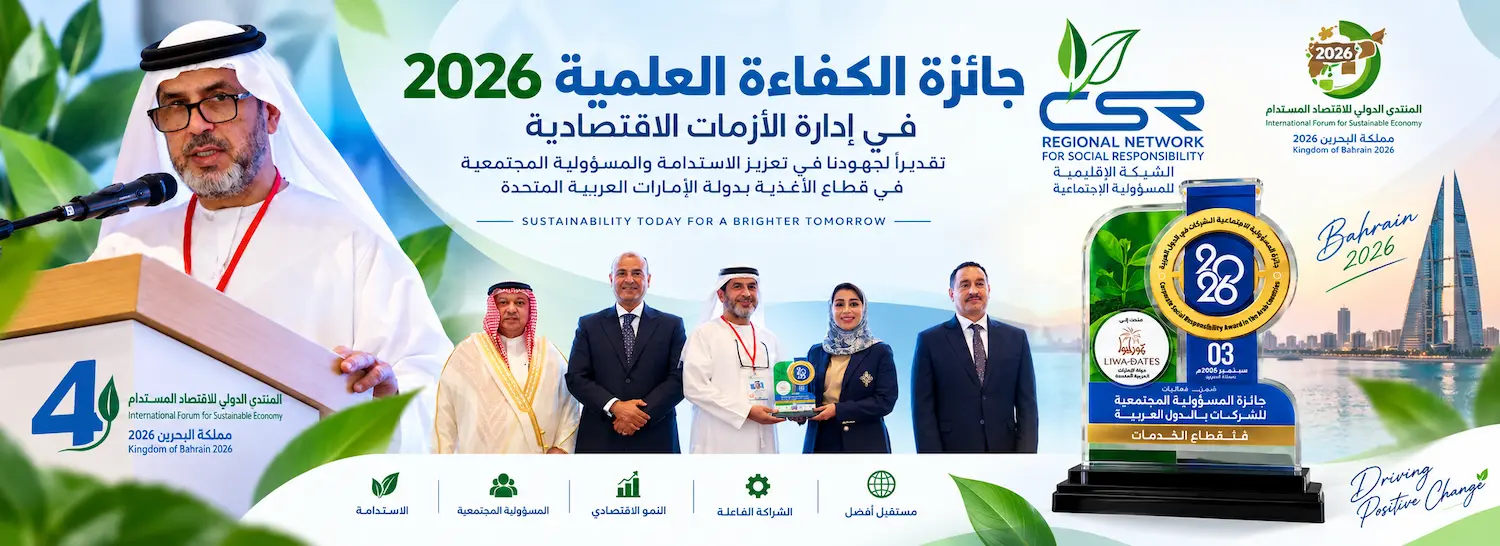
This forward-looking vision was highlighted during the recent participation of Liwa Dates Food Industries Factory at the International Sustainable Economy Forum 2026 in the Kingdom of Bahrain, held under the umbrella of the Arab CSR Awards. This engagement reinforces the national industrial sector’s pivotal role in leading the green economy transition and re-evaluating local agricultural resources.
From “How Much We Produce” to “How Much Value We Extract”
During the forum, CEO Mr. Mohamed Suhail Al Mazrouei presented a keynote paper titled:
«Innovation in Value-Added Date Manufacturing as an Entry Point to Maximizing Economic Value and Sustainability»
The paper underscored a fundamental paradigm shift in agri-food manufacturing: the core challenge is no longer “how many kilograms we yield,” but rather “how much economic and nutritional value we extract from every part of the palm tree.” This shift is propelled by dedicated research and development (R&D) and product diversification.
The presentation demonstrated Liwa Dates’ journey in evolving from raw date processing to building a comprehensive food ecosystem. This includes functional food products such as caffeine-free date pit coffee, healthy bakery items, sauces, syrups, and beverages—expanding market reach and boosting sectoral added value.
The Three Pillars of the “Palm Economy” Strategy
Liwa Dates introduced a broader framework titled «From Date Economy to Palm Economy», viewing the date palm as an integrated eco-industrial ecosystem. Sustainability in this model rests upon three interconnected pillars:
- 1. Economic Dimension (Maximizing Value): Transforming raw dates and secondary parts into high-margin products, opening new export markets for the UAE national brand and fostering competitive investment opportunities.
- 2. Environmental Dimension (Circular Economy & Zero Waste): Fully utilizing fronds, fibers, and agricultural byproducts as raw materials for secondary industries, preventing waste and supporting national net-zero goals.
- 3. Social Dimension (Community Empowerment): Empowering local farming communities across Abu Dhabi and the UAE by enhancing crop commercialization and fostering an innovation-driven agricultural culture.
Traditional Model vs. Liwa Dates Sustainable Model
Resource Utilization: The traditional model strictly utilizes the date fruit only, while the Liwa Dates model achieves full utilization across the entire palm (fruit, pits, fronds, and fibers).
Core Focus: The traditional model relies on fruit yield volume (quantity), whereas the Liwa Dates model focuses on value addition and innovation (quality & processing).
Environmental Impact: The traditional model leads to agricultural loss and waste, whereas the Liwa Dates model drives a circular economy with zero waste.
Market Reach: The traditional model is limited to seasonal and commodity outlets, while the Liwa Dates model expands into gourmet foods, hospitality, and global export markets.
Liwa Dates | Future Outlook
The experience of Liwa Dates proves that the future of the agri-food sector relies on turning the date palm into a renewable platform for industrial innovation, sustainability, and green growth.